A clean velvet selvedge needs two mechanisms working in step: the selvedge cutter that trims the weft surplus, and the selvedge knitting unit that locks the edge. If the clearance between the cutter blade and the knitting needle is wrong, either the cut is incomplete or the cutter also cuts the yarns the knitting unit has just tied. This article is for velvet loom technicians who set selvedge cutters. It explains why this clearance matters, how to check it and what you will see in the fabric when it drifts.
Why the cutter and selvedge knitting are set together
On every pick the weft crosses the fabric and leaves a surplus at the edge. The selvedge knitting unit ties the outermost yarns together so the edge cannot unravel. The selvedge cutter then trims the weft surplus outside that tied edge.
Where and when each of these happens are linked:
- If the cutter cuts too close to the knitting point, it can cut the tied yarns and the edge unravels.
- If it cuts too far from the knitting point, long weft ends are left at the edge and you get a fuzzy selvedge.
So the selvedge cutter setting is never judged on its own, but together with the position of the knitting needle.
Where the correct clearance comes from
We do not publish a fixed clearance value. It depends on the loom model, the type of selvedge knitting element and the fabric being woven. To get the right value:
- Use the setting in your loom manual.
- If you have no manual, take a loom in the same weaving shed that gives a clean edge as your reference and compare against it.
- Record the clearance before you change anything, so you can go back if the result gets worse.
How to set a velvet loom selvedge cutter
The general sequence:
- Prepare: stop the loom, isolate it and make safe access to the selvedge area.
- Clean: remove clippings and dust from the cutter and knitting area; build-up gives false readings.
- Check the parts: look for nicks or wear on the cutter edge, a tired cutter spring and a bent knitting needle. A setting made on worn parts will not hold.
- Position: turn the loom by hand to the moment the cutter cuts.
- Measure: check the blade-to-needle clearance with a feeler gauge and compare it with the manual value or your reference loom.
- Adjust: if needed, loosen the cutter mounting, correct the position and lock it again.
- Test: run the loom slowly and watch the edge for a number of picks.
- Record: note the final setting so you have something to compare with next time.
Field note: Have the same person set the left and right selvedges on the same day. When two technicians set the two edges at different times, one clean edge and one fuzzy edge is a common result.
What a drifted setting looks like in the fabric
| Symptom | Likely cause | Part to check |
|---|---|---|
| Long weft ends at the edge (fuzz) | Cutter too far from the knitting point | Cutter position, selvedge cutter |
| Edge unravelling, knitting yarns cut | Cutter too close to the knitting point | Cutter position, knitting needle |
| Intermittent cut, some picks uncut | Tired spring or play in the mounting | Cutter spring, connection |
| Setting will not hold | Mounting loosening or worn part | Connection, complete selvedge cutter |
| Problem on one edge only | Setting or parts on that side | Cutter and knitting on that side |
When the setting keeps drifting
A setting that drifts quickly usually means a part is worn. Rather than keep adjusting, replacing the part wastes less time:
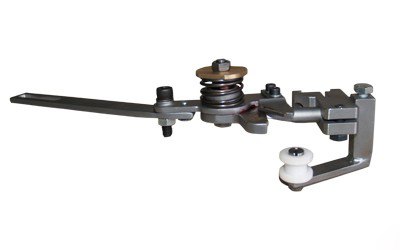
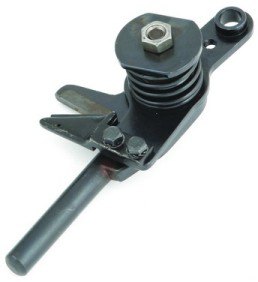
- On MPS looms the right and left selvedge cutters are separate codes: MPS Selvedge Cutter Complete Right (M6) and MPS Selvedge Cutter Complete Left (M7).
- For VME and VMM looms there is the VME - VMM Selvedge Cutter Complete (M5) and the VME - VMM Selvedge Cutter Spring (M16).
- On the selvedge knitting side we list the Selvedge Knitting Needle Type (KO1) plus perforated (KO2) and grooved (KO3) types.
All cutter parts are on the Cutter Group page.
FAQ
How often should I check the setting?
We do not recommend a fixed schedule. Check it whenever the cutter or knitting element is changed, when the fabric quality changes, and whenever you see fuzz or unravelling at the edge.
Do I need to reset after replacing the cutter?
Yes. A new cutter may not cut at exactly the same point as the old one. Always check the clearance after fitting.
How do I know which selvedge knitting element my loom uses?
Send us a photo of the knitting element and we will identify whether it is the needle, perforated or grooved type.
If the selvedge cutter setting on your velvet loom will not hold, send photos of the cutter and knitting area on WhatsApp to +90 541 951 44 10 and we will help you find the worn part.