Light and dark bands running across a velvet roll, patches where the pile is short or long, a surface that feels wavy under the hand: these usually point to the cutting group. The trouble is that three different parts can produce the same result: the velvet knife cord, the knife itself or the grinding stone. Replacing the wrong one costs time and money. This guide is for velvet loom technicians who want to trace uneven pile height back to the right part, in the right order.
Why pile height goes uneven
In face-to-face velvet, the pile yarns between the two cloth layers are cut in the middle by a knife travelling along a slide. An even pile needs three conditions at the same time:
- The knife moves at the same speed and on the same line on every pass.
- The knife edge is sharp enough.
- The knife passes exactly through the middle between the two cloth layers.
Anything that upsets one of these shows up in pile height. The knife cord governs smooth movement, the grinding stone keeps the edge sharp, and the knife bed and slide keep the cutting line stable.
First suspect by symptom
The pattern of the defect tells you a lot about its source.
| Symptom | Likely cause | Part to check |
|---|---|---|
| Regularly spaced bands across the cloth | Local wear or stretch in the knife cord | Knife cord, cord pulley and drum |
| Waviness plus fuzz along the cut line | Knife not being sharpened properly | Grinding stone, knife |
| Pile changes from one selvedge to the other | Knife line off square or play in the slide | Knife bed, slide |
| Sudden, irregular waviness | Nick or damage on the knife edge | Knife |
| Visible change in carriage speed | Worn drive belt | Knife drive belt |
Is it the velvet knife cord?
Regularly repeating bands most often come from the knife cord. When some sections of the cord wear faster than others, carriage speed changes from pass to pass. When the cord stretches, the carriage stops short of its end position.
To check:
- Stop the loom and bring the knife carriage to mid position.
- Press the cord between drum and pulley; noticeable give means stretch.
- Run the cord through your hand and look for glazing, raised fibres or thinning.
- Check the pulley and drum grooves for built-up cord dust.
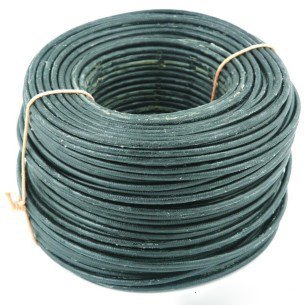
We list dry and oiled knife cords in 4, 5 and 6 mm, for example Knife Cord Oiled 4 mm (B9) and Knife Cord Dry 4 mm (B6). The signs of a worn cord are covered in detail in our article on when to replace the knife cord.
On VME and VMM looms the cord pulley and drum are separate codes (B22, B23); on MPS looms there are separate pulleys for the fork and guide positions (B20, B21).
Is it the knife?
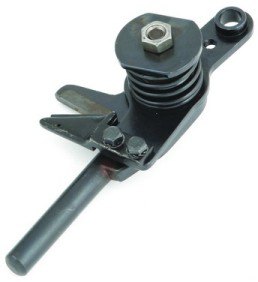
If the waviness started suddenly and is irregular, suspect a nick or damage on the knife edge. Check the blade by eye against the light. A nicked knife cuts differently at the same point on every pass, however good the stone is. Our fabric cutting blades are listed in thicknesses from 0.25 to 0.45 mm; staying with the thickness you already run keeps the setting intact.
Is it the grinding stone?
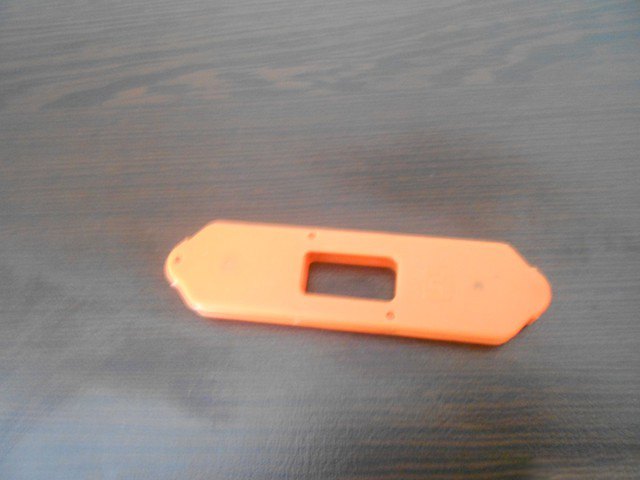
If the waviness comes with fuzz along the cut line, the knife may not be getting sharpened properly. Look for glazing, clogging or uneven wear on the stone. Grinding stones are listed as separate codes FI, FII and FIII, for example Grinding Stone FI (B12). Confirm which one belongs on your loom by comparing it with your current stone.
Field note: Changing all three parts at once may cure the fault, but it will not tell you the cause. Check the cord first, then the stone, then the knife. Weave a few metres after each step and look at the cloth; knowing which change made the difference saves time the next time it happens.
Two causes people overlook
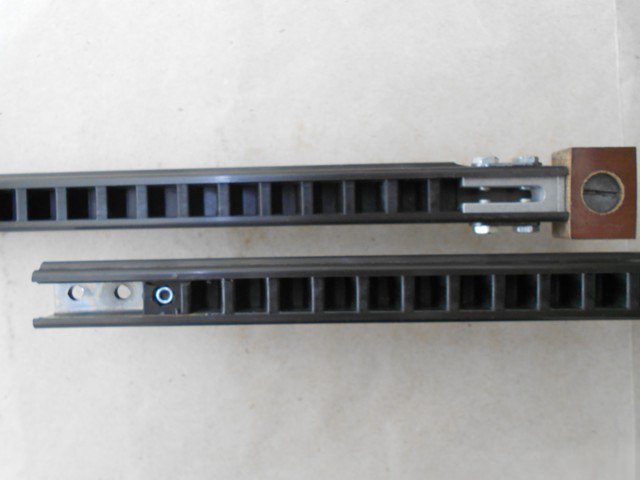
Knife bed and slide: if the slide has developed play, the cutting line is not stable and pile height drifts from one selvedge to the other. The Knife Bed Complete, roller type (B1) and the graphite type (B2) are both in the catalogue.
Knife drive belt: a worn belt driving the knife carriage makes carriage speed irregular. The T10 1960 Knife Drive Belt (KS3) is the part to check.
All cutting group parts are listed on the Knife Group page.
FAQ
Why do I only see the bands on certain colours?
Height differences are easier to see on light shades and lustrous yarns. The fault is probably present across all production and just less visible on dark colours.
The cord is new but the bands are still there. What next?
Check the pulley and drum grooves; a worn pulley will make even a new cord run unevenly. Then move on to the stone and the knife bed.
Does dry versus oiled cord affect pile height?
A cord that does not suit the slide type wears unevenly over time and can contribute to waviness. As a rule of thumb, dry cord goes on graphite slides and oiled cord on roller slides.
If you are unsure whether you need a velvet knife cord, grinding stone or knife bed, send photos of the fabric and the cutting group on WhatsApp to +90 541 951 44 10.