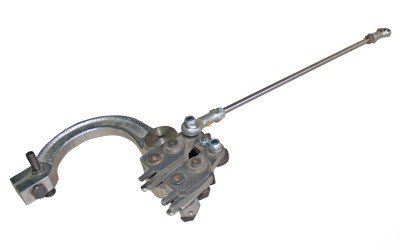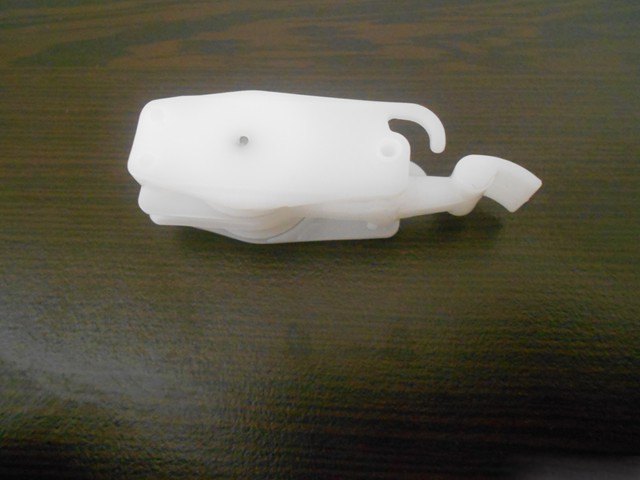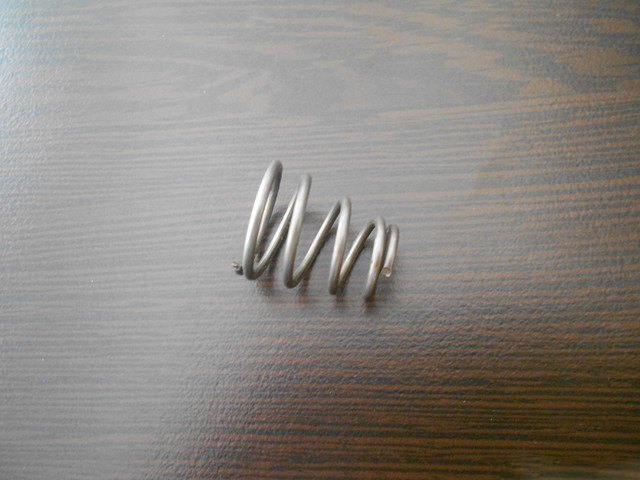
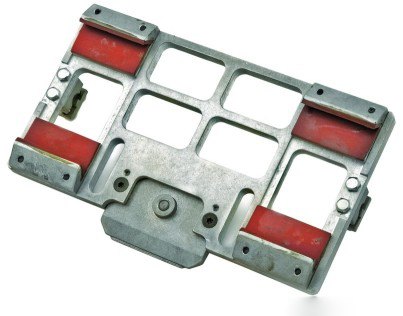
The knife bed complete is the backbone of the pile-cutting system on a velvet loom. This product guide is for mill owners, purchasing managers and maintenance teams who are weighing up a knife bed replacement. It compares the two types in our catalogue, the Knife Bed Complete with rollers (B1) and the Knife Bed Complete with graphite (B2), and explains when you need the whole bed and when a new slide is enough.
What does a knife bed complete do?
In double-cloth velvet weaving, the pile yarns that join the two cloth layers are cut through the middle by a knife travelling across the loom width. The knife bed is the track the knife carriage runs on, together with the body that holds that track in place. The slide is the wear surface the carriage actually touches.
If the bed is out of true, the knife does not follow the same line on every stroke. The result is uneven pile height, a wandering cut line and irregular wear on the grinding stone. That is why the bed, the knife cord and the grinding stone should be treated as one system. The whole range sits on our Knife Group page.
B1 roller versus B2 graphite
The key difference is how the carriage moves along the bed.
B1 Knife Bed Complete with rollers
On the roller type, the carriage runs on rolling elements, so friction is handled by rolling contact. In common practice this type is paired with oiled knife cord. Rollers that turn freely and seats without play are the precondition for this system to run well.
B2 Knife Bed Complete with graphite
On the graphite type, the carriage slides over a running surface where graphite acts as a dry lubricant. It is usually paired with dry knife cord. Because no oil is involved, mills producing light-coloured and white velvet often prefer this setup to reduce the risk of oil marks.
If you are not sure which type is on your loom, two photos of the bed, one from the side and one from above, are enough for us to tell.
Comparison table
| Feature | B1 Roller | B2 Graphite |
|---|---|---|
| Motion | Rolling | Sliding |
| Usual cord pairing | Oiled knife cord (B9–B11) | Dry knife cord (B6–B8) |
| Separate slide code | B3 Knife Slide with rollers | B4 Knife Slide with graphite |
| What to inspect | Free-turning rollers, seat play | Scoring on the running surface, graphite layer |
| Main risk | Oil carry-over, marks on fabric | Dust build-up, surface scoring |
Whole bed or just the slide?
Not every sign of wear calls for a complete bed. Slides are also listed under their own codes: the Knife Slide with rollers (B3) and the Knife Slide with graphite (B4). Ask yourself:
- Is the wear limited to the surface the carriage touches? A new slide is usually enough.
- Is the bed body bent or cracked, or are the mounting holes worn oval? Then a complete bed is the better choice.
- Do you want to convert the loom from roller to graphite, or the other way round? That is a change of type; plan the complete bed and the matching knife cord together.
- Has the bed already been repaired several times? Repeated repairs upset alignment, and a complete replacement shortens setup time.
Signs your knife bed needs replacing
- Pile height stays uneven even with a new knife cord and a new grinding stone.
- The carriage catches or changes sound at the same point on every stroke.
- On the roller type, one or more rollers bind when turned by hand.
- On the graphite type, you can feel scoring or steps on the running surface.
- Knife cords wear out unusually fast and show one-sided wear.
Field note: Do not keep running the old knife cord after fitting a new bed. A cord that has shaped itself to the old bed tensions unevenly on the new one and wastes its first days. Changing bed and cord in the same stoppage gives the cleanest result.
What to prepare before ordering
A knife bed has to be aligned correctly on the loom, so a little preparation speeds things up: the loom model and nameplate, a photo of the current bed, whether it is roller or graphite, and the diameter of the knife cord you use. Cord options start from the Knife Cord Dry 4 mm (B6), with the other diameters on their product pages. Cord wear signs are covered in our article on when to replace the knife cord.
B1 and B2 beds are equivalent parts made by Göktürk. We match dimensions to the information and sample you send, and we ship to mills in India, Egypt, Indonesia and Europe.
FAQ
Can I run dry cord on a roller bed?
In common practice, roller beds run with oiled cord and graphite beds with dry cord. If you are considering a different pairing, show us your current setup with photos first and we will talk it through before you decide.
Which loom models do B1 and B2 fit?
We do not publish a fixed model list for these two codes. Send your loom model and a photo of the current bed, and we will confirm the fit.
Repair the knife bed or buy a new one?
If the wear is only on the slide surface, a B3 or B4 slide may be enough. If the body is bent or the holes are worn oval, a complete bed means less downtime and easier alignment.
For a price and fit check on a B1 or B2 knife bed complete, send your loom model and a photo of the bed on WhatsApp to +90 541 951 44 10.