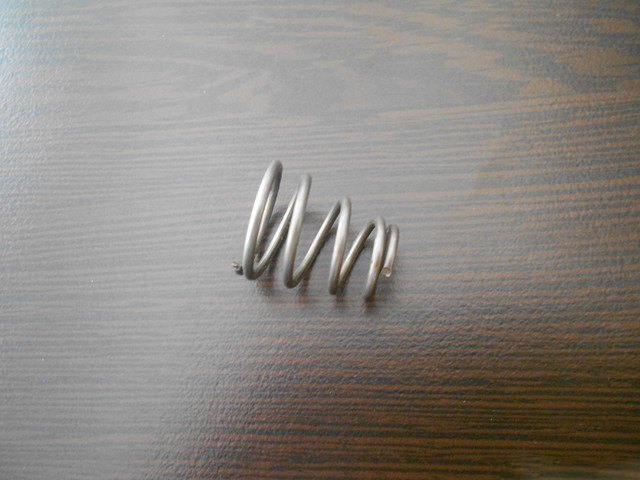
The weft cutter spring is one of the smallest parts in the cutter group and one of the easiest to overlook. This article is written for maintenance technicians and shift supervisors running Van de Wiele MPS and VME-VMM velvet looms. It explains how a weak spring and an over-stiff spring show up in the fabric and in the cutter itself, which of the two does more damage, and what to check before you swap the spring. We deliberately give no force figure: the right tension depends on the loom model, the cutter type and the yarn being woven.
What the weft cutter spring actually does
After every pick, the weft cutter trims the yarn at the fabric edge. Spring force is what keeps the two cutting edges in proper contact and what brings the cutter arm back to its start position after the cut. In other words, the spring sets both the cutting pressure and the return movement.
That makes the spring more than a single part. The cutter diamonds, the cutter arm and the cutter shaft all work against the force it provides. When the spring weakens or is stiffer than it should be, every one of those parts feels it.
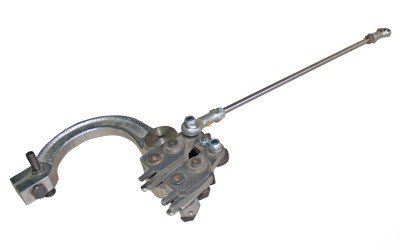
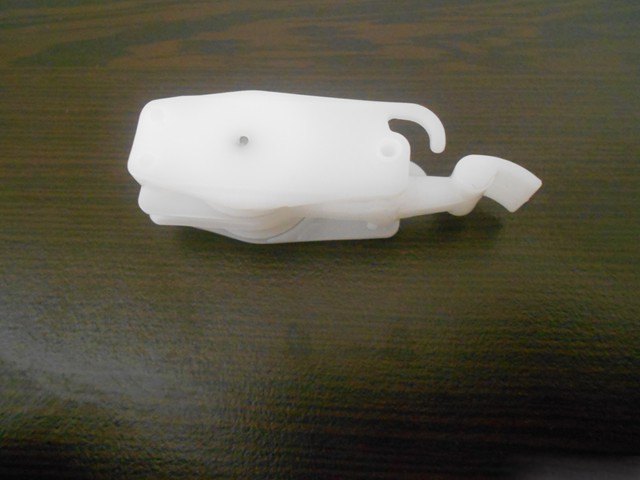
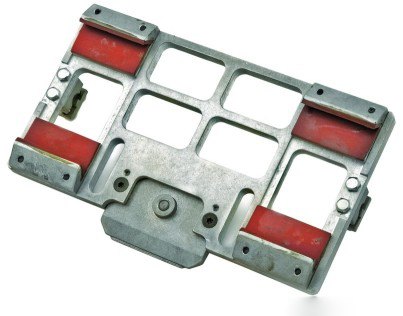
Our catalogue lists the MPS Weft Cutter Spring (M15) and, for VME and VMM selvedge cutters, the VME - VMM Selvedge Cutter Spring (M16). The full range is on the Cutter Group page.
Too little tension: the quality problem
A spring that has fatigued or stretched can no longer press the cutting edges together firmly. Typical results on the shop floor:
- The weft end is crushed or frayed instead of cut cleanly.
- Weft tails of uneven length are left along the edge.
- On some picks there is no cut at all; the yarn is pulled apart and the edge suffers.
- The cutter arm returns late, and the motion looks soft and hesitant.
A weak spring often looks exactly like a blunt cutter diamond, so the first reflex is to change the diamond. If the cut is still poor with a fresh diamond, the spring is the likely culprit.
Too much tension: the wear problem
An over-stiff spring, or a spring fitted in the wrong position, causes trouble too, and the signs appear later:
- Cutter diamonds wear faster than usual and may chip at the edge.
- Play develops early in the cutter arm and the shaft bore.
- Metallic knocking from the cutter area gets louder.
- The cutter snaps shut hard; the cut may look clean, but the parts are being fatigued.
Put simply, too little tension costs you quality and too much tension costs you parts. Fitting a harder spring because “it cuts better” solves the problem for a while and then shows up on your diamond and arm bill.
Symptom, likely cause, part to check
| Symptom | Likely cause | Part to check |
|---|---|---|
| Weft end crushed or frayed | Spring fatigued, low pressure | Weft cutter spring, cutter diamond |
| Long, irregular tails at the edge | Cutter closing late | Spring, cutter arm |
| Occasional missed cut | Spring unhooked or broken | Spring seat, cutter shaft |
| Knocking from the cutter area | Spring too stiff or fitted wrongly | Spring type, arm pin |
| Diamonds chipping quickly | Excessive cutting pressure | Spring, diamond alignment |
| Visible play in the arm | Long running under high load | Cutter arm and shaft |
Five checks before replacing the spring
- Stop the loom and open and close the cutter by hand a few times; feel whether the motion is smooth.
- Inspect the spring in place: any crack, distortion or opened-up hook at the end?
- Lay the removed spring next to a new one. A difference in free length or coil spacing is often all the evidence you need.
- Look at the cutting edge of the diamonds. If they are both chipped and blunt, assess spring and diamonds together.
- Check the cutter arm and shaft for play. A new spring will not work properly on a worn arm.
Field note: Do not “adjust” a spring by stretching it or cutting it shorter. A stretched spring soon settles back, and a shortened one makes the cutter close harder. The right fix is a new spring of the same type.
Which weft cutter spring for which loom?
Springs in our catalogue are split by loom model. M15 is for the Van de Wiele MPS weft cutter; M16 is used on the Van de Wiele VME and VMM selvedge cutter. If you prefer to renew the whole assembly, the MPS Weft Cutter Group Complete (M2) is available. If the diamond is also worn, adding the matching diamond, such as the Weft Cutter Diamond Small (M11), to the same order saves you a second stoppage.
Not sure of the exact model? A photo of the cutter as fitted plus the loom nameplate is enough. We match it by code and confirm the right spring before shipping, whether your mill is in India, Egypt or Europe.
FAQ
How often should the weft cutter spring be replaced?
We do not recommend a fixed calendar. Spring life depends on loom speed, number of shifts and cutter setting. Checking the spring whenever you see the signs above, or whenever you change diamonds, is the safest approach.
Is the selvedge cutter spring the same as the weft cutter spring?
No. They do a similar job but sit in different assemblies and carry separate codes in our catalogue (M15 and M16). Do not fit one in place of the other.
Is it worth keeping springs in stock?
Yes. Springs are small and quick to change, so a few spares per loom type cut downtime sharply when a cutter starts misbehaving.
For a weft cutter spring or any other cutter part, send the part code or a photo on WhatsApp to +90 541 951 44 10 and we will reply with availability.