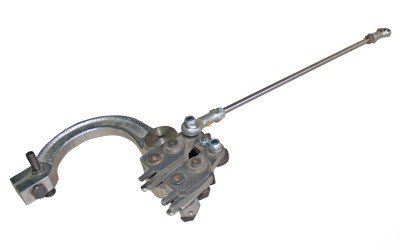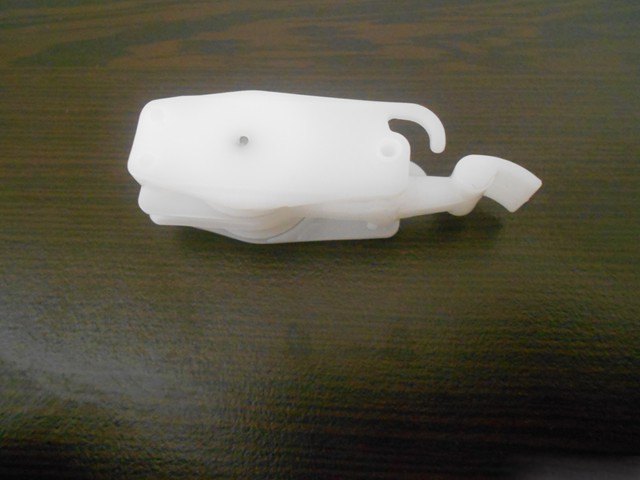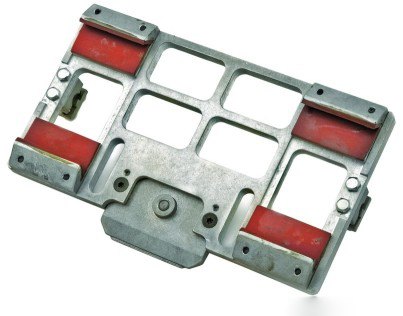
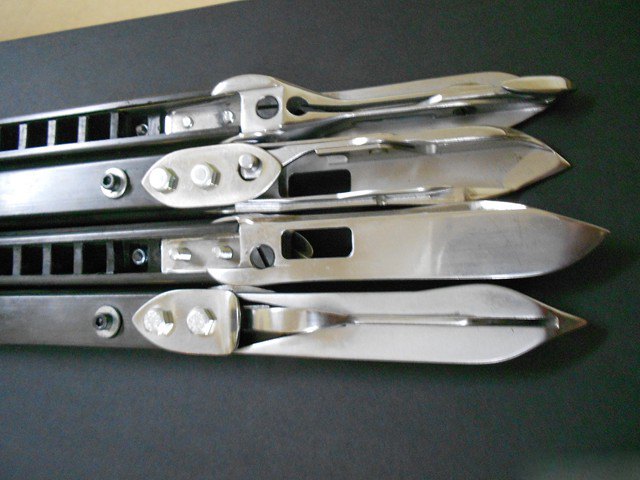
The carbon rapier carries the weft through the shed and is one of the fastest-moving parts on a velvet loom. This guide is for maintenance teams and shift technicians in mills running Van de Wiele velvet looms. It covers how to clean a carbon rapier, which signs to inspect for and how to store spare rapiers on the shelf. We do not quote a service life: carbon rapier life varies widely with loom speed, number of shifts, yarn type and the condition of the guides.
Why carbon rapiers need specific care
Carbon rapiers are chosen for fast looms because they are light and stiff. The same structure makes them sensitive to impact, careless handling and bending. A small dent that would be harmless on a steel part can start as a crack or delamination on a carbon rapier and grow while the loom runs.
On a velvet loom the rapiers work as a male and female pair. Damage on one side affects the weft transfer on the other, so care should always be thought of in pairs. That is why the VDW Carbon Rapier Set Complete (K1) is offered as a set, with male and female sides also available under their own codes.
Cleaning a carbon rapier
Removing dust and yarn residue regularly slows wear on both the rapier and its guides.
- Clean only with the loom stopped and the rapier in a safe position.
- Wipe dust off the surface with a dry, lint-free cloth.
- Hold compressed air parallel to the surface, not at right angles; the aim is to move dust, not to load the rapier.
- Carefully clear yarn residue from the channel and gripper areas of the rapier head.
- Do not use solvents or chemicals that the loom manufacturer does not recommend.
Inspection checklist
- Inspect the full length under good light: hairline cracks, delamination or loose fibres?
- Run a finger along the edges to feel for nicks or dents.
- Check the gripping and transfer areas on the VDW Rapier Head Male (K6) and VDW Rapier Head Female (K7) for wear.
- Check for play where the rapier joins the head.
- Look at the guides the rapier runs in for burrs or sharp edges; a damaged guide will scratch a new rapier in no time.
Symptom, likely cause, part to check
| Symptom | Likely cause | Part to check |
|---|---|---|
| Lengthwise scratches on the rapier | Burr or debris in a guide | Guides, blocks |
| Nicks or loose fibres at the edge | Impact or careless handling | Carbon rapier |
| Weft dropped during transfer | Worn gripping area on the head | Male or female rapier head |
| Rapier motion getting noisier | Play in connections, guide wear | Rear connection, guides |
| Repeated faults on one side | Rapier or head damaged on that side | Rapier and head on that side |
Field note: When you take a rapier off the loom, do not carry it by the middle in one hand. Support it at both ends and keep it straight. A good share of visible damage on carbon rapiers happens during removal, fitting and carrying, not on the loom itself.
How to store spare carbon rapiers
A spare rapier on the shelf has to be sound on the day it goes into the loom. For correct storage:
- Lay the rapier flat, supported along its full length; never leave it hanging or leaning.
- Do not put heavy parts on top of it or stack it with other parts in one box.
- Keep it away from direct sunlight, heat sources and damp floors.
- Where possible, keep it in its original packaging with the label.
- Label male and female rapiers as matched pairs to avoid mix-ups at fitting.
Complete set or one side?
If only one side is damaged, you can replace just that side with the VDW Carbon Rapier Complete Male (K2) or the VDW Carbon Rapier Complete Female (K3). If both sides are worn, or the heads are worn too, a complete set gives a cleaner restart. Check the guides and blocks at the same time; the whole rapier system is listed on our Velvet Loom Parts page.
Göktürk carbon rapier sets are equivalent parts for Van de Wiele looms. Sharing your loom model and a photo of the current rapier speeds up the fit check, and we ship to mills in India, Egypt, Indonesia and Europe.
FAQ
Can a cracked carbon rapier be repaired?
We do not recommend it. A crack or delamination can grow at high speed and end in a broken rapier, which then damages guides and heads. Replacing a damaged rapier is the safer choice.
How often should I inspect carbon rapiers?
We do not give a fixed interval. A good habit is to check the rapier whenever you work on a rapier head or guide, and whenever weft transfer faults increase.
Is replacing only the rapier head enough?
Yes, if the rapier itself is sound and the problem is limited to the head. Check the connection area on the rapier when changing the head; a new head on a loose connection wears out quickly.
For prices on a carbon rapier set, a single-side rapier or rapier heads, just send the part code on WhatsApp to +90 541 951 44 10.