On Van de Wiele VME and VMM velvet looms, a clean selvedge depends largely on the state of the selvedge cutter. Our M5 VME - VMM Selvedge Cutter Complete is for mills that want to renew the whole cutter arrangement on these two models in one go. This article explains what the complete selvedge cutter does, when a complete unit makes more sense than a single cutter, and what information to prepare before you order. It is written for maintenance teams running VME and VMM looms, in Türkiye and in export markets.
What a complete selvedge cutter does
On every pick the weft crosses the full fabric width and leaves a surplus at the edge. The selvedge cutter trims that surplus. A clean cut gives a neat edge; an incomplete cut leaves loose yarn ends, the fuzzy selvedge weavers complain about.
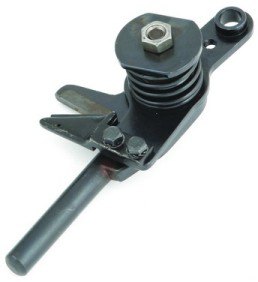
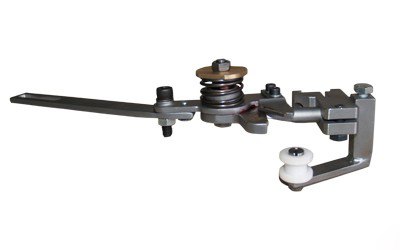
M5 is listed in our catalogue for Van de Wiele VME and VMM. “Complete” means it comes as a ready-to-fit arrangement, not just the cutter on its own, so you do not have to collect and set individual parts one by one during a change.
M5 and the related codes
For VME and VMM, the selvedge cutter side of our catalogue includes:
| Code | Product | Best choice when |
|---|---|---|
| M5 | VME - VMM Selvedge Cutter Complete | The whole arrangement is due |
| M10 | VMM - VME Selvedge Cutter | Only the cutter itself is worn |
| M8 | VME - VMM Selvedge Cutter Connection | Cutter is fine, the mounting has play |
| M16 | VME - VMM Selvedge Cutter Spring | Cutting is intermittent, spring is tired |
MPS looms use separate right and left selvedge cutters (M6, M7), which are not interchangeable with M5.
When a complete unit makes sense
Replacing just the cutter is often enough, but the complete unit is the better choice when:
- The connection and spring are tired as well as the cutter: changing parts one at a time means a new setting each time.
- Downtime is expensive: a complete arrangement shortens the removal and fitting time.
- Parts have been mixed over previous repairs: parts fitted at different times may not work well together.
- You want a shelf spare: a complete unit in stock gets the loom running quickly after a failure, and the sound parts you remove become second-line spares.
Field note: After fitting a complete cutter, check the edge of the first roll along its whole length. If it starts clean and the fuzz only appears later, the cutter is probably not the problem; look at the selvedge knitting or the waste take-up.
Checking order for a selvedge cutter fault
Before deciding on a complete change, make sure the cutter really is the cause:
- Clean the cutter area; packed clippings can jam the cutter.
- Check the cutting edge for nicks, glazing or rounding.
- Compare the spring by hand with the one on the other side of the same loom.
- Look for play in the connection.
- Confirm the selvedge knitting element and the selvedge waste take-up gears are working.
If the fault still points to the cutter after these steps, go ahead with M10 or M5.
What to send before ordering
- Loom model (VME or VMM) and, if known, year of manufacture
- A photo of the current selvedge cutter fitted on the loom
- Whether you want a single cutter or the complete arrangement
- Number of looms
We do not ask for dimensions or tolerances; we match parts from photos and model information. All cutter parts are listed on the Cutter Group page.
Fitting tips
- Isolate the loom and make safe access to the cutter area.
- Photograph the position of the old cutter before removing it.
- Clean the mounting surface.
- Fit the new cutter, turn the loom slowly and watch the blades close.
- Check the setting against your loom manual; the setting value should come from the manual.
Getting more life from a selvedge cutter
How long a selvedge cutter lasts depends heavily on day-to-day care. Habits that make a difference on the shop floor:
- Regular cleaning: clippings and dust around the cutter stop it closing fully and strain the edge. A quick clean at shift change is a good habit.
- Watching the waste take-up: if trimmed waste is not pulled away steadily, the cutter cuts it again and again and wears for nothing.
- Not forgetting the spring: a tired spring forces even a sharp cutter to crush rather than cut. Check the spring by hand whenever you look at the cutter.
- Comparing both sides: watching cut quality on the left and right edges together helps you spot deterioration on one side early.
- Keeping a change log: noting which loom had a cutter change and when helps you see differences between looms.
FAQ
Does M5 fit MPS looms?
No. M5 is listed for VME and VMM. For MPS, the right and left selvedge cutters are separate codes (M6, M7).
Should I buy just the cutter (M10) or the complete unit (M5)?
If the connection and spring are sound, M10 may be enough. If several parts are worn, or you want to keep downtime short, M5 is more practical.
How long does a selvedge cutter last?
We do not quote a fixed figure. Loom speed, weft yarn, number of shifts and how clean the cutter area is kept all decide it.
For a price on the complete selvedge cutter or to check the fit on your loom, send a photo of your cutter on WhatsApp to +90 541 951 44 10.